
Pacemaker and Defibrillator Testing
Regular testing of your pacemaker or defibrillator is an important part of managing your ongoing heart health. At CardioOne Brisbane, our qualified cardiologists provide comprehensive device checks to ensure your implant continues to function safely, efficiently, and according to your heart’s needs.
What Is Pacemaker and Defibrillator Testing?
Pacemaker and defibrillator testing assesses how your implanted cardiac device is functioning. These devices continuously monitor and help regulate your heart rhythm, and testing ensures they’re detecting and responding correctly to any changes.
During your appointment, your cardiologist will use a special programmer that communicates wirelessly with your device. This allows them to review key data such as your heart rhythm history, battery life, and device activity. The test also confirms that your pacemaker or defibrillator is delivering electrical impulses accurately when needed.
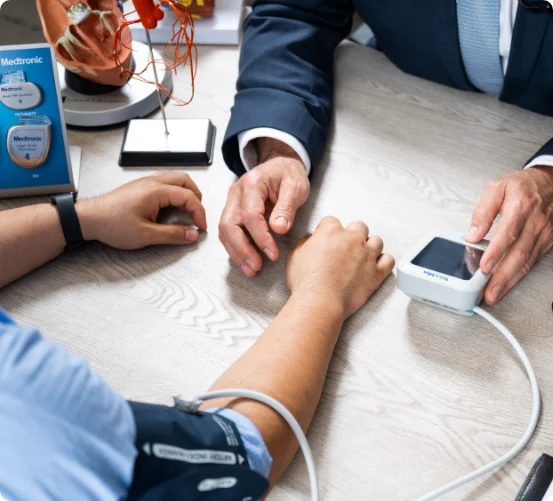
Why Might You Need This Test?
Your cardiologist will recommend routine testing at scheduled intervals after your device is implanted. These checks are essential to:
- Confirm your device is working as intended
- Detect any battery or lead issues early
- Adjust device settings to suit your current heart rhythm
- Monitor any arrhythmias or irregular heartbeats the device may have recorded
In some cases, additional testing may be recommended if you experience symptoms such as dizziness, fainting, shortness of breath, or if you’ve received a defibrillator shock.
State-of-the-art Facility
Located in Chermside Health Hub
Level 2, 621 Gympie Rd, Chermside
What to Expect During the Test
Pacemaker and defibrillator testing is a non-invasive and painless procedure. You’ll be comfortably seated while the programmer device is placed over the site of your implant, usually near the collarbone.
Your cardiologist or technician will download the data and perform a few functional checks. These tests may include temporarily adjusting the pacing rate to see how your heart responds. The process typically takes 20 to 30 minutes.
There’s no recovery time required, and you can resume your usual activities immediately after your appointment.
How Often Should Devices Be Checked?
Device checks are usually performed:
- Before you leave the hospital after implantation
- At 6 weeks post-procedure
- Every 6-12 months, or as recommended by your cardiologist
Some modern pacemakers and defibrillators are equipped for remote monitoring, allowing your device data to be securely transmitted to the clinic. This enables your cardiology team to detect issues early and reduce the need for frequent in-person visits.
After the Test
Your cardiologist will review the device data with you and discuss any necessary adjustments or follow-up. If changes to your medication or treatment plan are needed, these will be carefully explained.
Your results are stored securely in your CardioOne medical record to support ongoing management and coordination with your broader healthcare team.
Supporting Your Long-Term Heart Health
Pacemaker and defibrillator testing is part of a broader approach to cardiovascular care. At CardioOne, our cardiologists provide integrated management for patients with heart rhythm disorders, heart failure, and coronary disease, ensuring your treatment plan remains personalised and evidence-based.
If you have concerns about your heart device or experience new symptoms, arrange a review appointment with your CardioOne cardiologist.