Exercise Stress Test
Your doctor may recommend an exercise stress test if you experience symptoms like chest pain, shortness of breath, or dizziness, or if you are at risk for heart disease. It can also be used to evaluate the effectiveness of certain heart treatments.
What is an Exercise Stress Test?
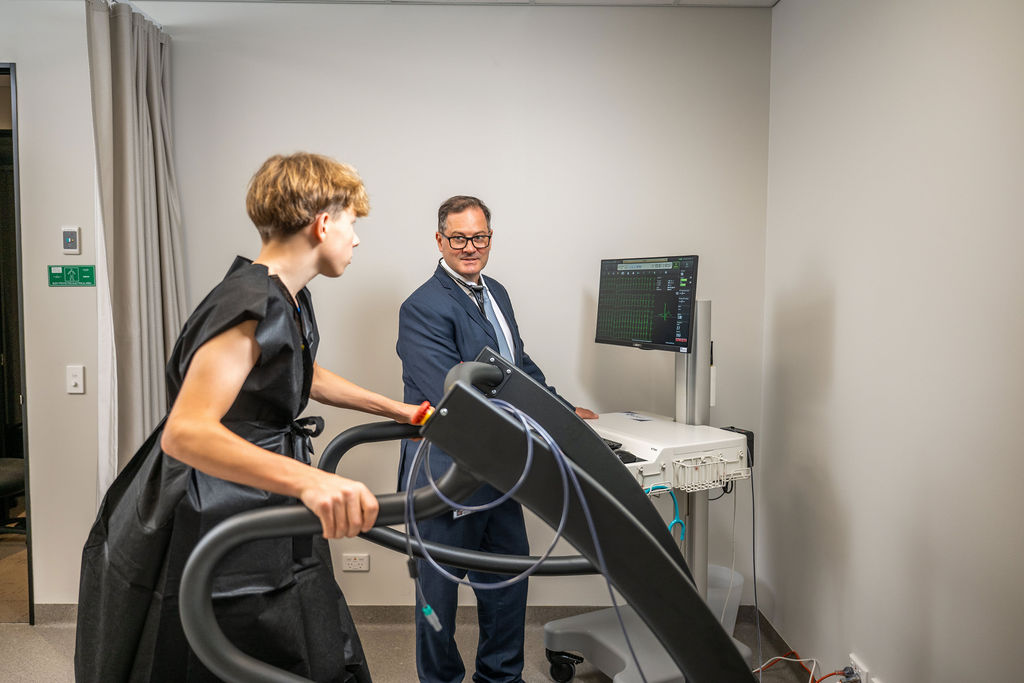
An exercise stress test is a non-invasive diagnostic tool used to assess how well your heart functions under physical exertion. It helps detect issues that may not be easily detectable without exercise, such as coronary artery disease, irregular heart rhythms, as well as overall cardiovascular fitness. The test involves walking or jogging on a treadmill while your heart activity, blood pressure, and breathing are monitored.
How to Prepare for an Exercise Stress Test
Before your test, Prof Darren Walters at Cardio One will discuss any specific preparation instructions based on your health history and medications. In general, follow these guidelines:
- Wear comfortable clothing and shoes suitable for walking or jogging.
- Avoid eating, drinking, or smoking for at least 3 hours before the test to prevent discomfort or interference with the results.
- Limit caffeine and alcohol intake on the day of the test, as they can affect your heart rate and blood pressure.
- Inform Prof Walters about any medications you are taking—some may need to be adjusted before the test. If you have any questions about which medications to take, discuss this during your consultation.
- Stay hydrated, but avoid excessive fluids right before the test.
- Get a good night’s sleep before the test to ensure you’re well-rested and ready for physical activity.
State-of-the-art Facility
Located in Chermside Health Hub
Level 2, 621 Gympie Rd, Chermside
What to Expect During an Exercise Stress Test
Before the test begins, electrodes will be placed on your chest to monitor your heart’s electrical activity, and a blood pressure cuff will be applied to track any changes. Once you are ready, you will start walking on a treadmill at a slow pace. The speed and incline will gradually increase to make your heart work harder, stimulating moderate physical activity.
Throughout the test, your heart rhythm, blood pressure, and any symptoms you experience will be closely monitored by medical staff. The exercise stress test will continue until you reach your target heart rate, experience symptoms that require stopping, or feel unable to continue. After the exercise phase, you will be monitored for a short period while your heart rate and breathing return to normal.
Once the stress test is complete, you may be asked to rest while your heart rate returns to normal. Prof Walters will review the results and discuss any findings with you. If abnormalities are detected, additional tests or treatments may be recommended.
Possible Risks and Side Effects from an Exercise Stress Test
Exercise stress tests are generally safe when performed under medical supervision. However, some people may experience dizziness, shortness of breath, chest pain, irregular heart rhythms, or, in very rare cases, a cardiac event. Prof Darren Walters will carefully assess your health history and risk factors before proceeding and will discuss any concerns with you beforehand. Throughout the test, medical staff will be on hand to ensure your safety and respond immediately to any issues.
Why Choose Cardio One for an Exercise Stress Test
Prof Darren Walters at Cardio One is a structural interventional cardiologist with extensive knowledge and experience in cardiology gained from multiple hospitals and universities around the world. He provides clear explanations and personalised recommendations based on your results, helping you take control of your heart health.
If you feel you need an exercise stress test, contact Cardio One and schedule a consultation with Prof Darren Walters.